
CRT-100P / 200P
CRT-100P / 200P Contact and Loop Resistance Testers
100 A or 200 A continuous · 0.01 µΩ · four-wire
A milliamp bridge reads the oxide film on a switch contact, not the metal, and comes back several times too high. These push continuous DC through instead, break the film down and measure the joint.
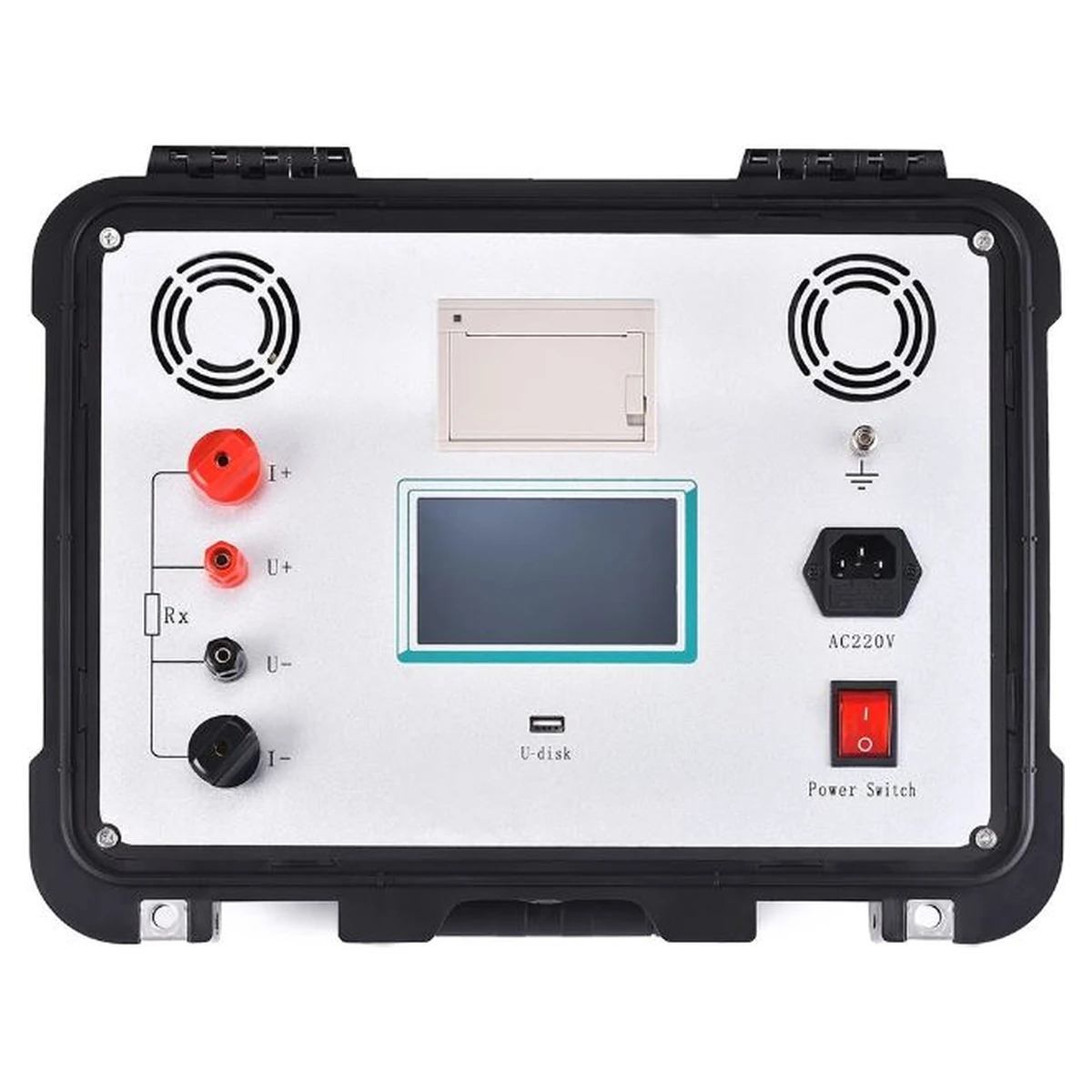
Four-wire terminals, printer, screen and USB
Two models
A double-arm bridge measures at milliamps, which cannot get through the oil film and oxide between a switch’s contacts. The reading comes back several times too high and tells you nothing about the metal underneath. These push continuous DC through instead.
Reaches 10 mΩ at 50 A. Six kilograms, 600 W, and enough current to satisfy the 100 A minimum the standards call for on breaker and isolator contacts.
Adds 150 A and 200 A for heavier work, where a higher current is specified or the joint is large. Seven kilograms, 1000 W.
Both resolve to 0.01 µΩ, both measure four-wire, and both share the same screen, printer and storage. The difference is current, and the size and weight that follow from it.
Pick the current, check the ceiling
Every setting works to the same compliance voltage, so the ceiling and the current move together. Choose the current your procedure specifies, then make sure the ceiling is above the resistance you expect.
The widest ceiling. Both models.
The figure the standards ask for. Both models.
CRT-200P only.
CRT-200P only. The narrowest ceiling.
Resolution is 0.01 µΩ below 100 µΩ and 0.1 µΩ up to 10000 µΩ, at ±(0.5% of reading + 2 digits) throughout.
Built for the switchyard
Continuous high current in a case you carry, with the result on paper before you leave the bay.
Built-in printer
A paper result at the switchgear, not back at the office.
200 records to USB
Held on the instrument and transferred to a stick for the report.
Quick, 10, 30 or 60 s
The 60 second setting meets the minimum current maintenance time the standards call for.
Automatic ranging
The instrument follows the signal, so an unknown joint does not need a range guessed first.
Over-temperature cut-out
Output stops if the set temperature is exceeded, which matters on a set delivering 200 A continuously.
Built to be knocked about
Temperature compensation to remove ambient drift, and military connectors for vibration resistance.
Both models run from AC 220 V ±10% at 50 Hz, drawing 600 W on the CRT-100P and 1000 W on the CRT-200P.
Technical specifications
| Measures | Contact and loop resistance of high and low voltage switchgear · DC resistance of cable and busbar · four-wire measurement throughout |
|---|---|
| Test current | CRT-100P: DC 50 A and 100 A · CRT-200P: DC 50 A, 100 A, 150 A and 200 A · fixed output, continuous |
| Measuring range | 10 mΩ at 50 A · 5 mΩ at 100 A · 3.333 mΩ at 150 A · 2.500 mΩ at 200 A |
| Accuracy | ±(0.5% of reading + 2 digits) |
| Resolution | 0.01 µΩ below 100 µΩ · 0.1 µΩ to 10000 µΩ |
| Test time | Quick, 10, 30 or 60 seconds |
| Ranging | Automatic, following the signal · over-temperature protection stops the output if the set temperature is exceeded |
| Display | Four inch colour touch screen · English interface · current and resistance shown together |
| Printer | Built in, printing the result at the switchgear |
| Memory | 200 records · transferred to a USB stick and read by the supplied software |
| Construction | Temperature compensation circuit to remove the effect of ambient temperature · military connectors for vibration resistance |
| Power | AC 220 V ±10%, 50 Hz · 600 W on the CRT-100P, 1000 W on the CRT-200P |
| Environment | Operating −10 to 40 °C · relative humidity 80% or below |
| Dimensions | CRT-100P 390 × 300 × 150 mm · CRT-200P 390 × 300 × 200 mm |
| Weight | CRT-100P 6 kg · CRT-200P 7 kg · both excluding accessories |
| Part numbers | CRT-100P 681008 · CRT-200P 682003 |
What’s in the case
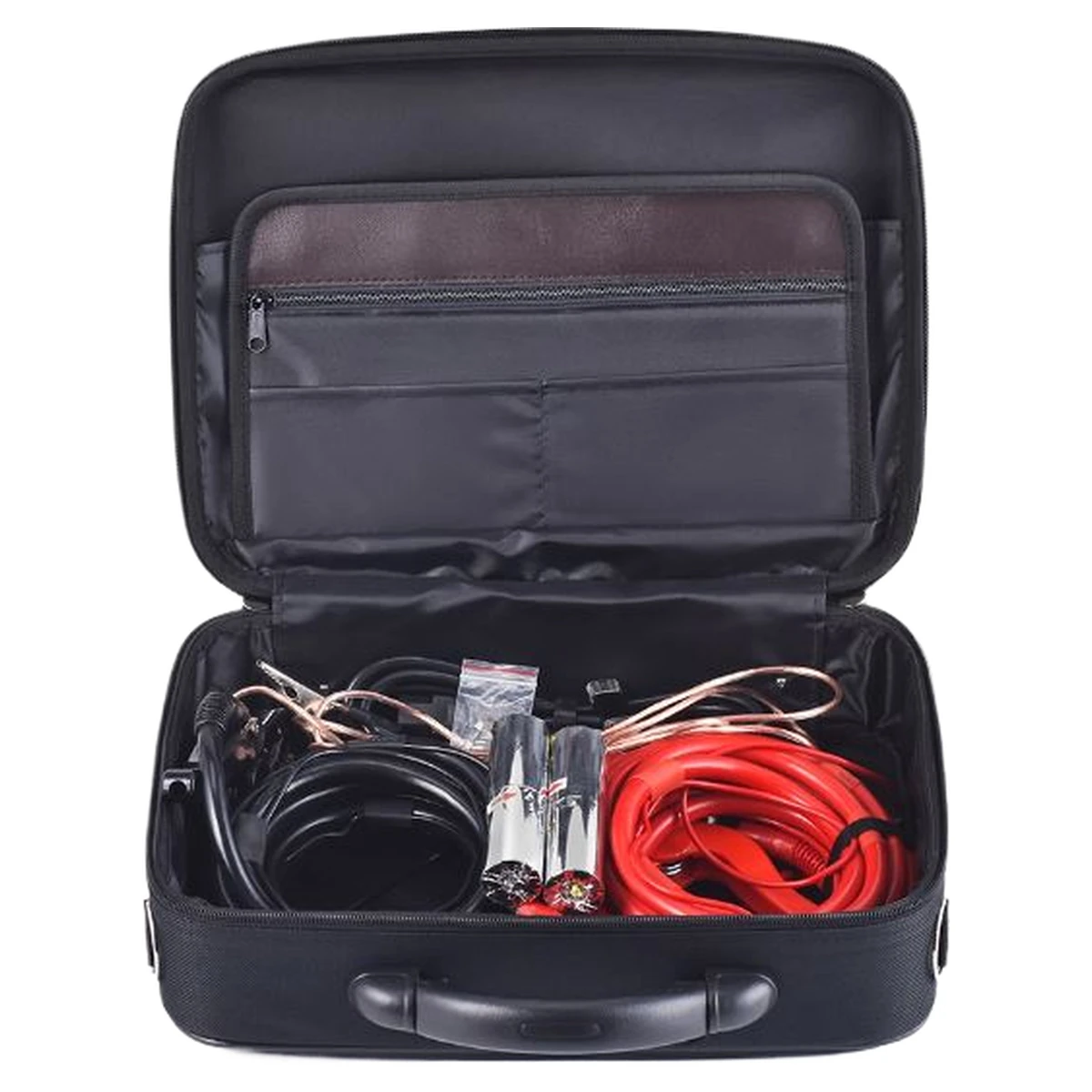
- CRT-100P or CRT-200P tester
- Test leads with high current pliers, red and black
- Earth lead and mains lead
- Fuses · 5 A for the 100P, 10 A for the 200P
- Printer paper and USB stick
- Accessory bag, manual and warranty certificate
The two models take different fuses, 5 A and 10 A, so check the rating before fitting a replacement. Results print at the switchgear, and 200 records are held for the report.